
At a Glance
- Definition: Internal communication manages the flow of information within a company and lays the foundation for shared goals.
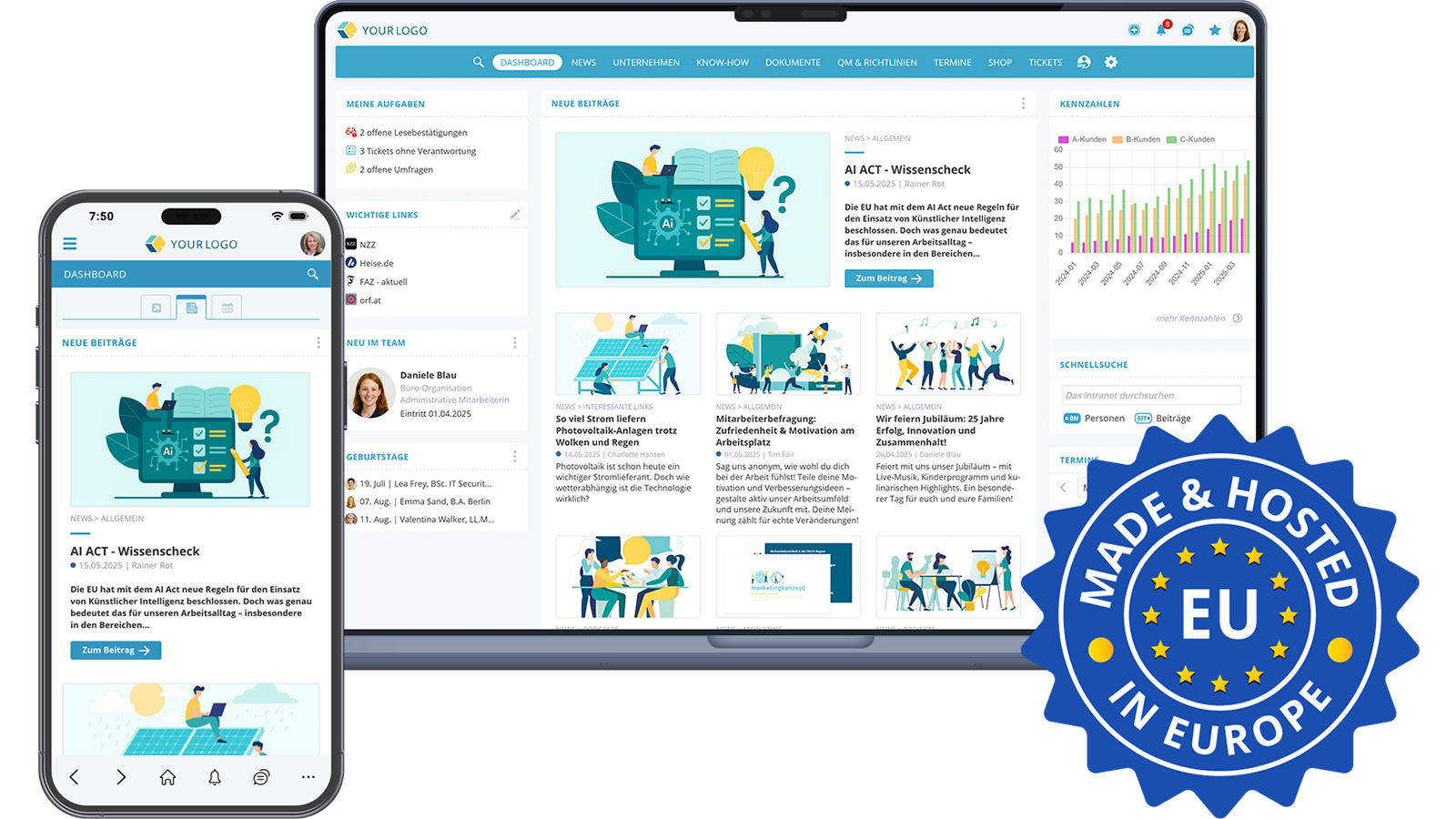
- Channel of choice: Social intranet and employee app as two access points to a single platform.
- Impact: Stronger employee engagement, fewer rumours, faster implementation of decisions.
- Measuring success: Read and engagement rates, read confirmations, surveys, goal achievement.
- Prerequisite: GDPR-compliant software hosted in ISO 27001-certified data centres in the EU.
What Is Internal Communication and Why Is It Business-Critical?
Every day, decisions are made, tasks are assigned and progress is achieved across every organisation. For this to work, the right information needs to reach the right people at the right time. That is exactly what internal communication delivers. It connects management, departments and employees, ensuring that everyone is moving in the same direction.
In today's working world — with remote teams, multiple locations and employees without a fixed desk — email distribution lists and notice boards are no longer enough. Modern internal communication requires a central, fast and interactive channel. That is precisely what Social Intranet Software is designed for. It brings together news, knowledge, documents and dialogue on a single platform, ensuring no information gets lost in someone's inbox.
Why Internal Communication via the Social Intranet Is Particularly Effective
A social intranet combines capabilities that traditional communication tools each fulfil only in part. News can be published in real time, presented in multimedia formats, commented on, and — for particularly important content — accompanied by a read confirmation. What was once a one-way announcement becomes an open exchange between leadership and employees.
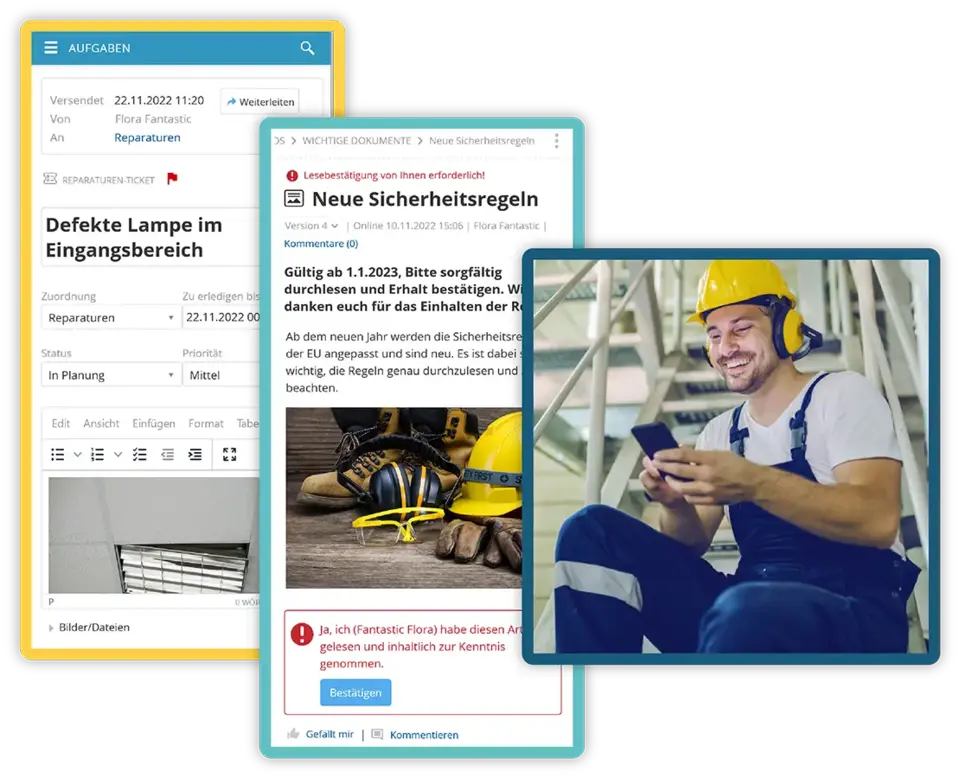
Organisations with distributed teams benefit especially from this consolidation. The social intranet and the employee app are two access points to the same platform, displaying identical content. Office-based staff primarily use the desktop interface for writing, managing and analysing content. Employees without a fixed workplace access internal communications on the go via the employee app — whether in a branch, a care setting or on site.
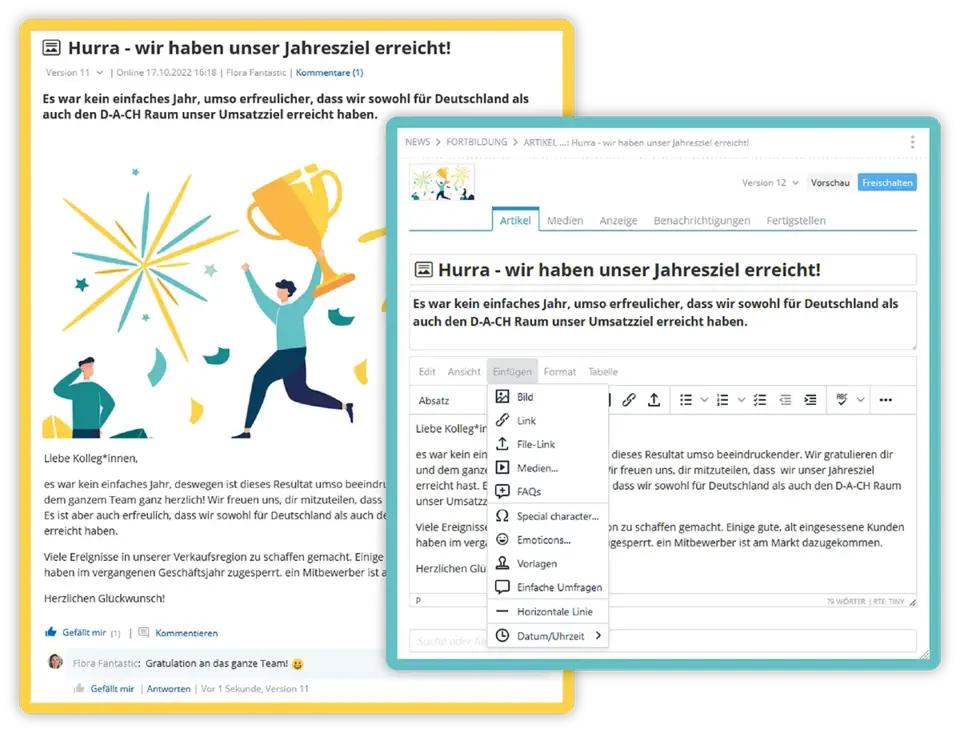 A social intranet motivates the workforce and helps achieve goals
Internal Communication as the Bridge Between Strategy and Day-to-Day Work
For a company strategy to move beyond slide decks, its messages need to be translated into everyday language. Internal communication is the channel that performs this translation. It breaks down quarterly targets into clear, digestible news posts, adds background context, and makes visible how individual teams contribute to the overall goals. This creates orientation — and means change is embraced rather than resisted.
What Types of News Belong in Internal Communication?
News in internal communication ranges from strategic updates by management to the canteen's daily menu. The broader the range of topics, the more employees find a reason to open the intranet every day. It is precisely this everyday relevance that determines whether a social intranet becomes an active company medium or remains an empty shell.
Content for Comprehensive Internal Communication
- Strategic company updates: Management decisions, organisational changes, new market orientations or quarterly results.
- Safety and crisis communication: Workplace safety notices, emergency plans, responses to incidents in production, IT or the supply chain. Every minute counts here, which is why push notifications via the employee app are essential.
- Product and service updates: Launches of new products, roadmap updates and improvements to existing services.
- Employee and team news: New hires, promotions, anniversaries and outstanding achievements by individuals or teams.
- Industry and market information: Developments that directly or indirectly affect the company or its customers.
- Training and development: Announcements for workshops, e-learning modules and webinars — ideally with a direct sign-up link in the post.
- Events and team building: Summer parties, Christmas celebrations, sports events or after-work gatherings to strengthen team spirit.
- Everyday soft news: Shift schedules, lunch menus, parking regulations, minor HR notices. These may seem unimportant, but they are often the very reason employees open the social intranet every day.
What Are the Benefits of Internal Communication via the Social Intranet?
Modern social intranet software is today's central lever for making internal communication structured, fast and transparent. Compared to email distribution lists, employee newsletters or traditional intranets, ten clear advantages stand out.
1. Central Hub for News and Knowledge
A social intranet creates an official platform for company news — a single source of truth. Employees know where to find current information, documents and resources, without having to switch between multiple tools.
2. Real-Time Updates
News can be published and updated instantly at any time. Employee newsletters used to appear monthly or quarterly. By the time they were distributed, the content was often already outdated. In the social intranet, information reaches employees the moment it is approved.
3. Read Confirmations for Important Messages
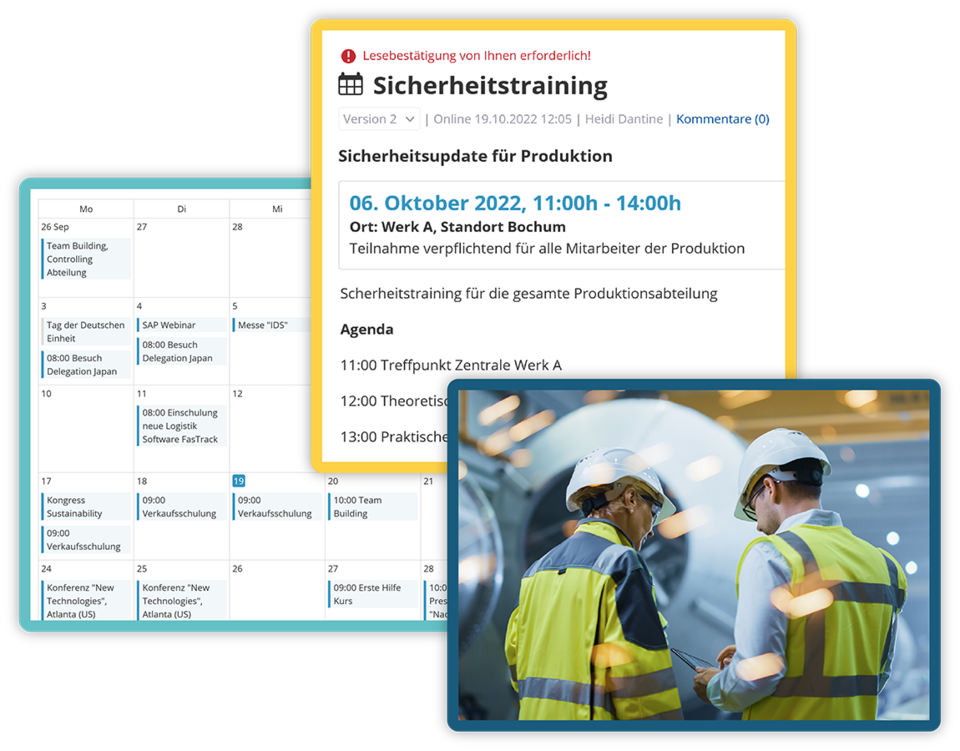
For safety-related updates, compliance notices or urgent news, it is traceable who has acknowledged a piece of information. Automatic email and push reminders increase the likelihood that critical content is actually read.
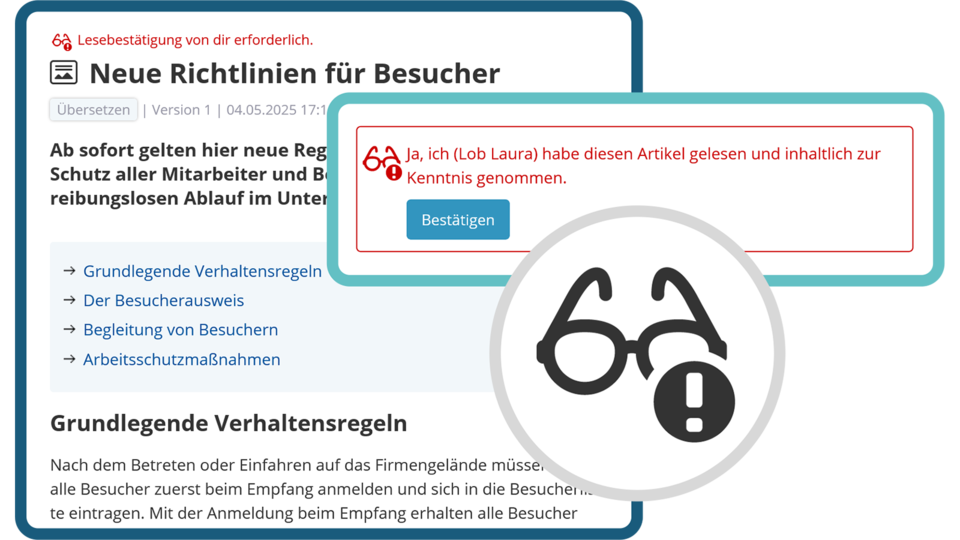 Communicate and confirm important information in a targeted manner
4. Multimedia Content
Videos, interactive graphics, animations, podcasts and linked documents can be embedded directly into news posts. This makes content more engaging and easier to understand — even complex topics can be communicated clearly.
5. Top-Down and Bottom-Up Communication
Unlike traditional notice boards, a social intranet works in both directions. Leaders can reach employees directly. Via surveys, idea boards and comment functions, employees can share their perspective. This feedback channel is the foundation of an open company culture and strengthens the organisation's capacity for innovation.
6. Automatic Archive with Full-Text Search
Published news is automatically archived and can be found at any time via full-text search. New employees benefit during onboarding, and long-running topics remain easy to trace.
7. Accessible via Desktop and Employee App
Whether in the office, in the field, in a branch or working from home — content is identically available via browser and mobile app. Access permissions allow news to be restricted to specific locations, departments or roles.
8. Interactivity and Engagement
Likes, comments, reactions, surveys and social interaction turn a news item into a dialogue. Employees can ask questions and give feedback straight away, creating a sense of belonging and the feeling of being heard.
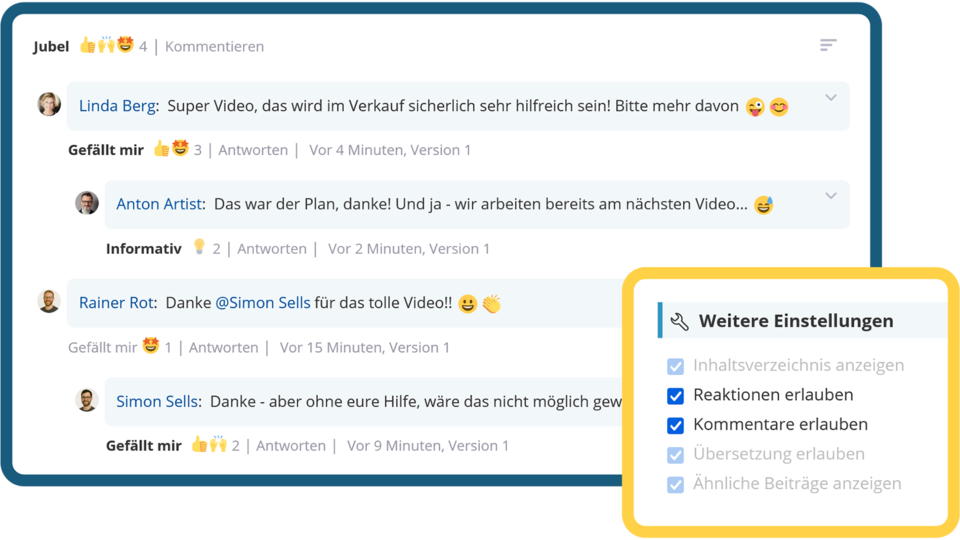 Give feedback and actively participate in discussions
9. Time Savings and Efficiency
Automated notifications, reminders and follow-ups noticeably reduce manual effort. Employees no longer need to be informed individually — they receive content in a timely manner and can ask questions directly within the post.
10. Lower Costs and Greater Sustainability
Printing and distributing internal newsletters is time-consuming, costly and resource-intensive. News in the intranet uses no paper, saves printing costs and reduces the environmental footprint of internal communication.
Who Benefits from News in Internal Communication?
Virtually every department contributes to and benefits from internal communication. For a social intranet to have full impact, responsibility for it should not rest with a single department. The more voices that are made visible, the more employees feel addressed.
- Management: communicates strategy, goals and important decisions directly to the workforce.
- Communications and Marketing: creates content, ensures a consistent tone and coherent messaging.
- HR and People department: informs staff about personnel changes, training offerings and benefits.
- IT department: announces technical innovations, updates and maintenance windows.
- Sales: shares sales successes, customer stories and new arguments for the market.
- Production, field service, project teams and more: document progress, tasks and results across departments.
The broader and more varied the topics in the social intranet, the more employees feel addressed. The ideal mix includes the cleaning team's shift schedule, tax updates for the finance department and project progress for management. This breadth is precisely what makes internal communication relevant to daily working life.
Best Practices: What Does Successful Internal Communication Look Like?
A technical platform alone does not guarantee successful internal communication. What matters is how it is used editorially. The following best practices have proven their value in practice and belong in every internal communication strategy.
Clear Strategy and Responsibilities
Who publishes what, when and for which audience? A lean editorial structure with defined roles and permissions prevents chaos and ensures internal communication remains manageable. A simple editorial calendar is often all it takes.
Combine Multiple Formats
Plain text messages can sometimes be overlooked. News with an image, a short video, an infographic or an audio comment increases both attention and comprehension. The format should also suit the content — a short push notification for alerts, and a detailed post for strategic topics.
Segment Audiences Instead of Broadcasting to All
Not every piece of news is relevant to everyone. Modern social intranet software allows posts to be targeted at specific locations, teams or roles. This reduces noise and increases the likelihood of content being read. Employees only see what is genuinely relevant to their area of responsibility.
Use Read Confirmations Strategically
Read confirmations are a powerful tool for compliance and safety communication. Used too frequently, they lose their impact. Best practice is a clear internal rule about when a confirmation is required — for example, for safety briefings or binding policies.
Actively Encourage Bottom-Up Communication
Modern internal communication thrives on dialogue. Surveys, idea boards and open comment functions lower the barrier to giving feedback. When leaders visibly respond to posts, employees become more willing to engage.
Make Successes and Recognition Visible
Celebrating successes has more impact than any motivational speech. Those who complete projects, achieve targets or delight customers should share it on the social intranet. Recognition via the platform is low-effort and long-lasting — and strengthens both motivation and identification with the company.
What Are the Benefits of a Well-Informed Workforce?
A well-informed workforce is not an end in itself — it is a direct lever for performance, retention and innovation. Effective internal communication contributes to all three dimensions.
- Higher employee motivation: Those who know the company's goals and successes identify more strongly with their employer. (Source: Smidts, Van Riel, Pruyn, The Impact of Employee Communication and Perceived External Prestige on Organizational Identification, 2001)
- Greater day-to-day efficiency: Employees who understand the context of their work make faster, more accurate decisions.
- Stronger company culture: Regular, open communication reinforces a sense of community and makes values tangible.
- Less uncertainty and fewer rumours: Clear information reduces speculation, especially during periods of change.
- Higher employee retention: Those who are well-informed and feel heard stay with the company longer — reducing turnover costs and protecting internal knowledge.
- Better decisions at every level: Well-informed teams work on the basis of facts and can resolve conflicts more constructively.
How Do You Measure the Success of Internal Communication?
The success of news posts can be measured far more effectively in a social intranet than in an employee newsletter or via an email distribution list. A well-thought-out internal communication approach works with clear metrics and actively uses the platform's analytics capabilities.
Read and Access Rates
Access figures show how many employees have actually opened a post. High values indicate relevance and good topic selection. Breaking down results by location or department helps identify gaps in internal communication.
Engagement Metrics
Likes, comments and reactions show whether content resonates. High engagement signals that employees not only read a post but found it worth responding to — a reliable indicator of quality and relevance.
Read Confirmations and Completion Rates
For important news with a read confirmation, the confirmation rate matters. For posts with a call to action — such as signing up for a training or completing a survey — actual completion rates are the key metric. Both make the effectiveness of internal communication measurable.
Impact on Company Culture
One dimension of measuring success is the improvement in employees' level of information and engagement. When a specific, open, service-oriented company culture is also modelled online, it influences how the team behaves more broadly. The social intranet has a positive effect on company culture and on communication behaviour throughout the organisation.
Surveys and Polls
Surveys directly within the social intranet deliver real-time feedback. The intranet itself can be assessed this way too — for example, through regular polls on the relevance and readability of content. Modern intranet systems integrate analytics tools, so no additional licences are required.
Impact on Company Culture and Goals
At the highest level, the success of internal communication is reflected in the achievement of the goals that were communicated. (Source: Gallup Engagement Index, 2025) These may be revenue targets, reductions in energy costs or the successful completion of strategic projects. Effective internal communication is therefore not merely an HR concern — it is a genuine business driver.
Frequently Asked Questions about Internal Communication in the Social Intranet
What is internal communication?
Internal communication encompasses all measures through which a company informs, engages and aligns its employees around shared goals. This includes news, one-to-one conversations, all-hands meetings and digital channels such as a social intranet or an employee app.
Which tools are suited to internal communication?
Social intranet software, employee apps, chat tools, email newsletters and all-staff meetings have all become established. In practice, the most effective approach combines a central platform for news and knowledge with short real-time channels such as chat and push notifications. An integrated solution reduces tool overload.
What distinguishes a social intranet from a classic intranet?
A classic intranet is typically a repository of documents and static pages. A social intranet builds on this foundation by adding news with likes and comments, surveys, chats and mobile access via an employee app. This transforms a static archive into a vibrant communication hub for the entire workforce.
How does internal communication reach employees without a desk-based role?
Through an employee app. It displays the same content as the social intranet on desktop, and reaches staff in production, in the field, in branches or working from home. Push notifications ensure content is noticed even without a fixed desk, creating seamless internal communication for every role.
How do you measure internal communication?
Through read and engagement rates, read confirmations, completion rates for calls to action and regular pulse surveys. At a strategic level, the achievement of communicated company goals is the ultimate measure.
What does GDPR-compliant internal communication look like?
GDPR-compliant internal communication relies on providers with EU-based hosting, clear role and permission frameworks, and transparent data processing. KenCube Social Intranet Software is hosted in ISO 27001-certified data centres in the EU — meeting the requirements of companies and organisations across Europe.
Conclusion: Internal Communication as a Central Driver of Business Success
Effective internal communication today is far more than an HR matter. It determines whether strategies are executed, safety rules are followed and change is embraced. The social intranet is the right tool for this — combining speed, multimedia, interactivity and reach. Combined with an employee app, it reaches every member of staff, whether at a desk or in the field.
Organisations that invest in modern social intranet software today gain a lever that goes far beyond traditional news distribution. They strengthen employee engagement, accelerate decision-making and lay the foundation for an open company culture.
Experience the KenCube Social Intranet and Employee App Live
If you want to take your internal communication to a modern platform, we'd be happy to show you in a short demo how KenCube brings together news, knowledge, documents and dialogue.
- Made & Hosted in Europe, in ISO 27001-certified data centres.
- Extensive feature set as a flat-rate — no upselling on individual modules.
Request a demo | Discover all features

Heidi is responsible for marketing at KenCube. When she's not creating new marketing materials, she enjoys engaging with customers and prospects, using KenCube to find solutions to their internal communication and collaboration challenges.
 Praktische Feature-Auswahl