 DE
Tools of internal communication
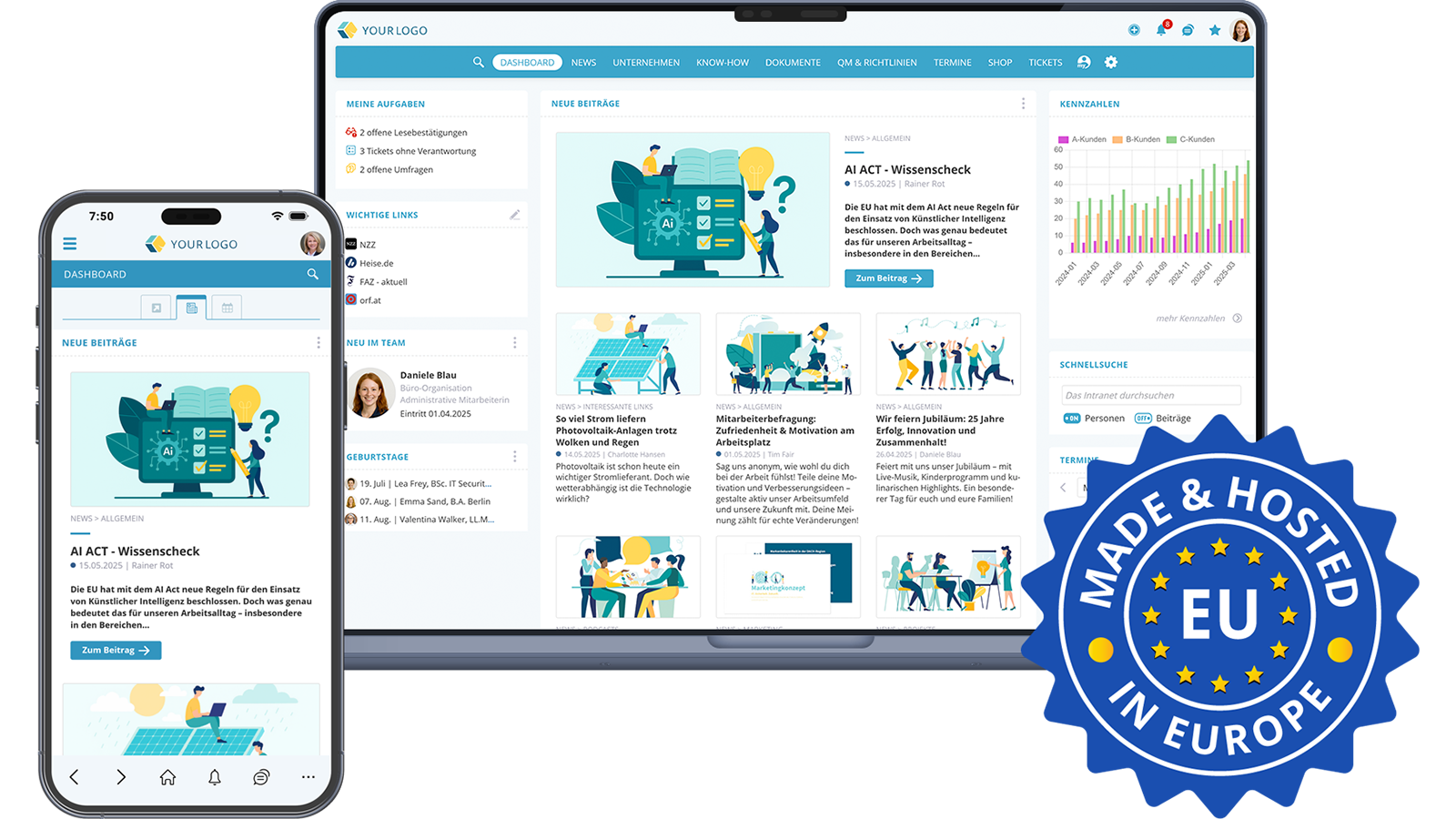
The intranet has always been one of the most important channels for employee communication. Extended with social interaction features, the social intranet plays a decisive role in modern internal communication. With a social intranet, a company covers almost all classic tools of internal communication on one platform, for example:
- an internal wiki,
- an internal newsletter,
- the employee magazine,
- the bulletin board,
- event management,
- chat and
- circulars and e-mails.
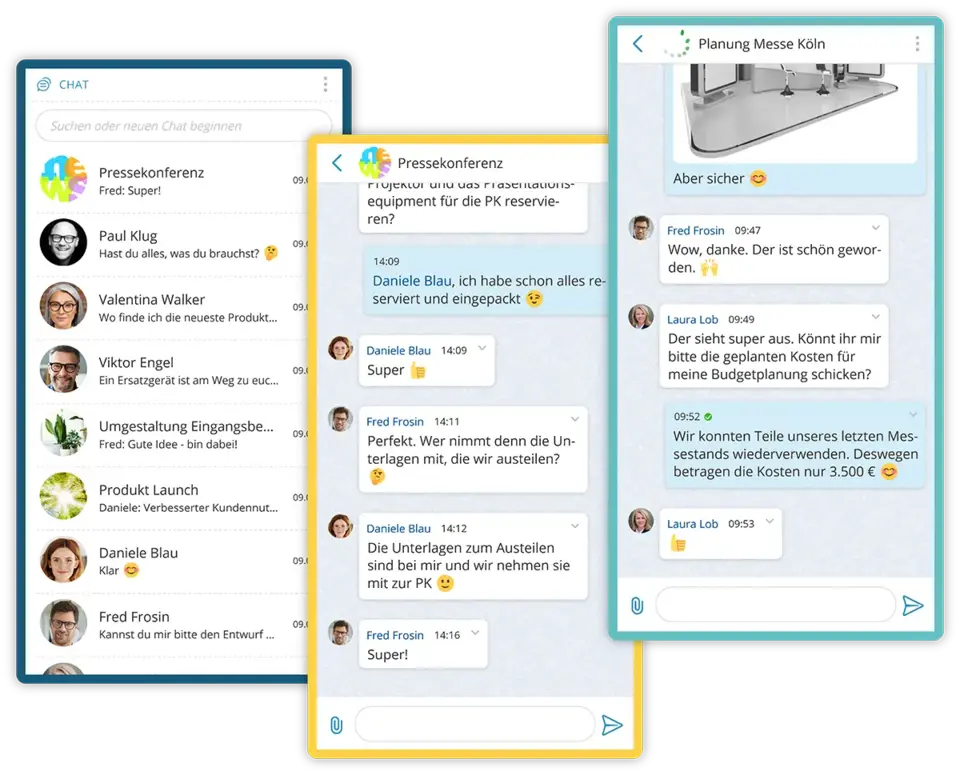 Secure internal company communication via the Social Intranet chat
Types of internal communication
Basically, we can distinguish between two types of internal communication:
1. Centrally managed, one-way and formal communication of news and updates from management and other department heads to employees
2. Two-way formal or informal communication between the employees of a company
The line between these two forms of internal communication is sometimes blurred. However, the first form is shaped by organizational guidelines and rules. They define the form, content and flow of communication. This type of communication is usually organized on a permanent basis and does not depend on individual people. You can find more information in the articles News in the company and Company wiki.
In this blog post, we focus on the second type of internal communication, namely communication between employees. It can be formal (for example, in the course of a project) or informal (for example, in the chat). What characterizes this type of internal communication is that it is not purely top-down and that all employees can really take part. This moves the workforce from the passive role of consuming information to the active role of shaping communication.
The role of the social intranet in internal communication
The social intranet is the hub around which everything revolves. It covers virtually all functions and needs for internal communication between employees, across locations, teams and departments. It also takes internal communication between employees to a new, professional and transparent level.
Features for efficient and smooth employee communication
The intranet offers a whole range of options for internal communication. In certain designated areas, employees can be allowed to post content themselves. This can be news about a work project just as much as a post on the intranet's virtual bulletin board when someone wants to sell their old car.
Social interaction
The name "social intranet" already suggests that it combines social media and intranet. It means that an intranet also offers features for social interaction. Employees can optionally like posts, give feedback and comment. Colleagues can also be tagged in articles or comments to point them to important, relevant content or comments.
Modern social intranets usually also include a chat feature. Employees can use it to talk to one colleague or to a group of colleagues. All of this happens not only in real time but also in compliance with data protection rules, unlike external chat platforms that are not GDPR-compliant and do not run through the internal network.
Collaboration
Good social intranet solutions also offer a ticket system or other tools for efficient project management. A selected group of employees can use them to keep track of projects and tasks, prioritize them and work through them efficiently. These tools usually also make it possible to discuss a task, give feedback, ask questions and comment.
Feedback
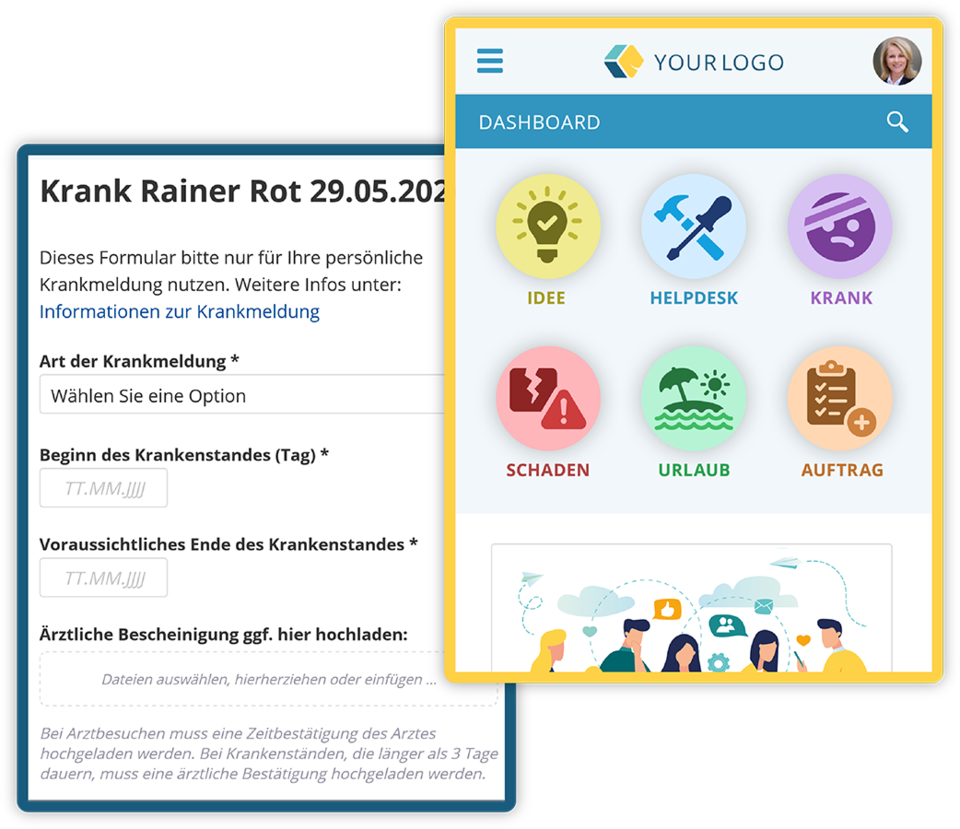
The social intranet is also the ideal place to ask employees directly about important topics, whether it is the destination of the next company outing or an employee satisfaction survey. No paper forms get lost, and all employees hear about it, even if they are out in the field. If needed, the anonymity of participants can also be guaranteed. Good survey tools in social intranets also let you evaluate the results in just a few clicks. Survey modules are a very valuable tool for promoting employee engagement and motivation.
Finally, the social intranet is the perfect place to collect ideas from employees. This lets staff get actively involved. Collecting ideas can also be promoted through the social intranet. For example, the best idea of the year can be awarded a prize. The intranet is also the ideal platform for communicating campaigns like this.
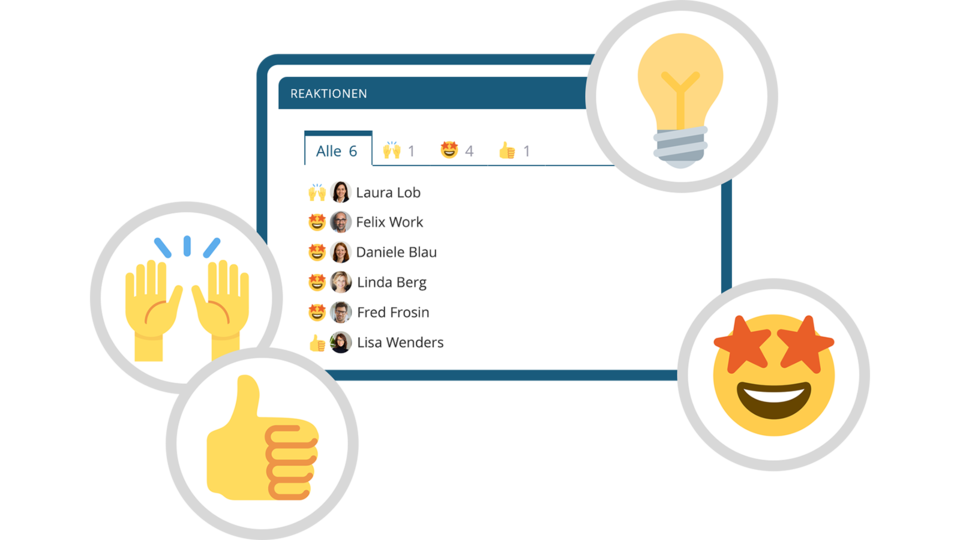 Show recognition and appreciation in the intranet
The benefits of internal communication in the social intranet
In today's digital working world, internal communication plays a decisive role in a company's success. A social intranet is a valuable tool for improving collaboration and the flow of information ("The social economy: Unlocking value and productivity through social technologies" McKinsey, 2012) within a company. Employee communication in the social intranet offers many benefits for companies and their employees:
Central source of information & consistent internal communication
The social intranet acts as a central platform where relevant information and resources are available from and for employees. Employees do not have to search through different sources to find the information they need. They receive consistent information and can actively ask questions, which reduces misunderstandings and saves time.
Better flow of information & feedback
A social intranet solution not only ensures that all employees have access to important information, but also that comments and questions are available quickly. This reduces misunderstandings and keeps all employees up to date, whether or not they are sitting at a desk in the office.
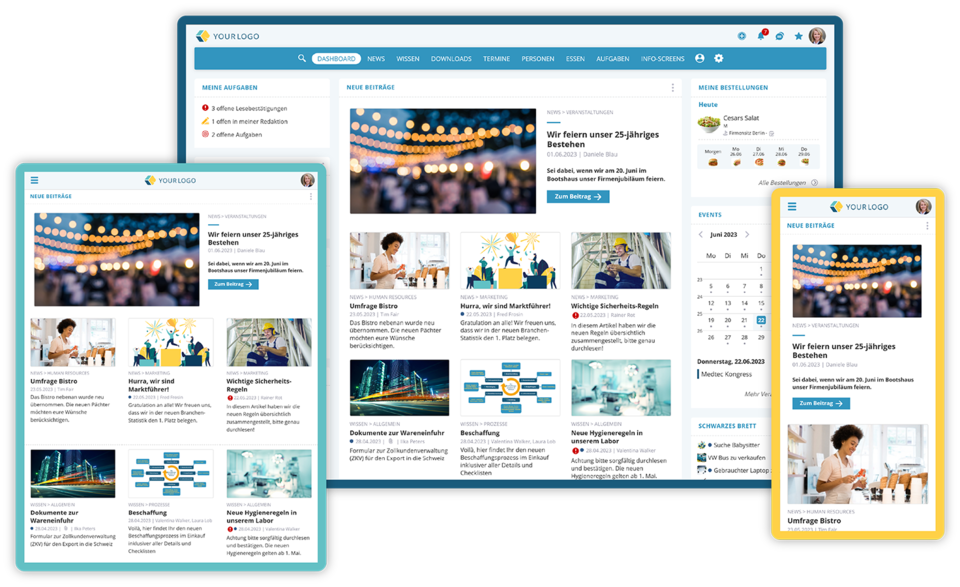 Employee app for smartphone/tablet or via desktop browser
Better collaboration
Social intranets offer a whole range of tools such as ticket systems and space for discussions and surveys. This promotes collaboration between teams, even when they are geographically separated.
Greater efficiency
Better communication channels mean tasks can be coordinated and completed faster. This leads to a more efficient way of working and saves time.
Messages that reliably reach everyone
Important announcements, feedback or discussions reach employees in real time, wherever they are. Thanks to the app and push notifications or e-mails sent directly from the intranet, employees stay well informed even on the go.
Higher employee motivation and engagement
When employees see that their opinion is heard, they are more satisfied and motivated.
A stronger corporate culture and employee engagement
A well-designed social intranet strengthens corporate culture and employee engagement. Its social features offer ways to take part and room for recognition. This makes it easier for employees to identify with the company.
A stronger sense of community
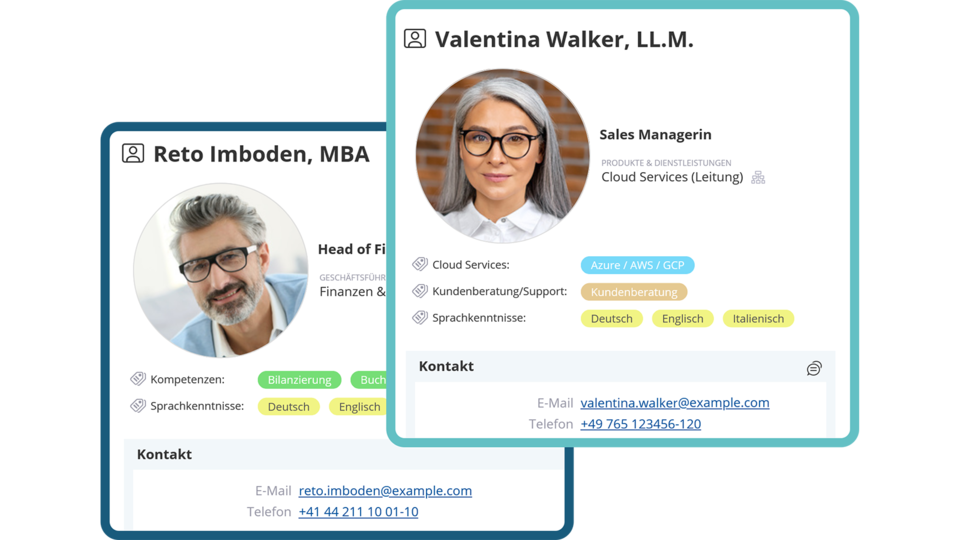
The social features of the intranet help build a sense of community. Employees can connect more easily and exchange ideas across departments and locations, which also strengthens team spirit.
More transparency
Unlike gossip in the break room or during a cigarette break, internal communication in the social intranet is transparent and trustworthy.
Flexibility & mobility
Many modern social intranet solutions are cloud-based and can be used on mobile devices via an app. They provide access to important information anywhere, whether working from home or on the road. This mobility gives employees more flexibility.
Security & control
A social intranet protects confidential company information with access controls and sophisticated permission settings.
Adaptability & scalability
A good social intranet solution is easy to customize and scale to meet a company's growing needs.
Conclusion
Internal communication via the social intranet improves not only employees' information, knowledge and understanding, but also their motivation and identification with the company. It also contributes to greater efficiency and a more positive corporate culture. Overall, effective internal communication via the social intranet helps a company become more agile and achieve its goals more effectively.

Active as a consultant in the IT industry for over 35 years, specialist in software development and interface design, founder of Artware Multimedia GmbH (later renamed KenCube)
 Practical selection of features