 DE
1. The Importance of Collaboration, Team Building and Networking
Companies with strong teams and good networking are usually more successful than organizations with weak teams. There are several reasons for this:
- Better communication and collaboration: With stronger team building and internal networking, employees communicate with each other, understand each other better and can work together more efficiently. In strong teams, communication is open and effective. Team members share information and ideas freely, which leads to better coordination and faster problem solving (“Steps to Building an Effective Team”, UC Berkeley).
- Higher productivity: Teams that work well together can in turn complete tasks faster. They make the best use of each team member's strengths and skills and minimize bottlenecks.
- Innovation and creativity: Strong, better connected teams are more open and more appreciative. The diversity of perspectives and skills among team members fosters innovation and creativity. Different viewpoints and experiences can lead to new ideas and solutions.
- Improved decision-making: In strong teams, employees dare to voice their views and opinions. The different perspectives and expertise of team members contribute to a more thorough analysis and a better assessment of options.
- Higher motivation and satisfaction: When team building and networking succeed, team members feel supported and valued instead of isolated. They are usually more motivated and more willing to perform.
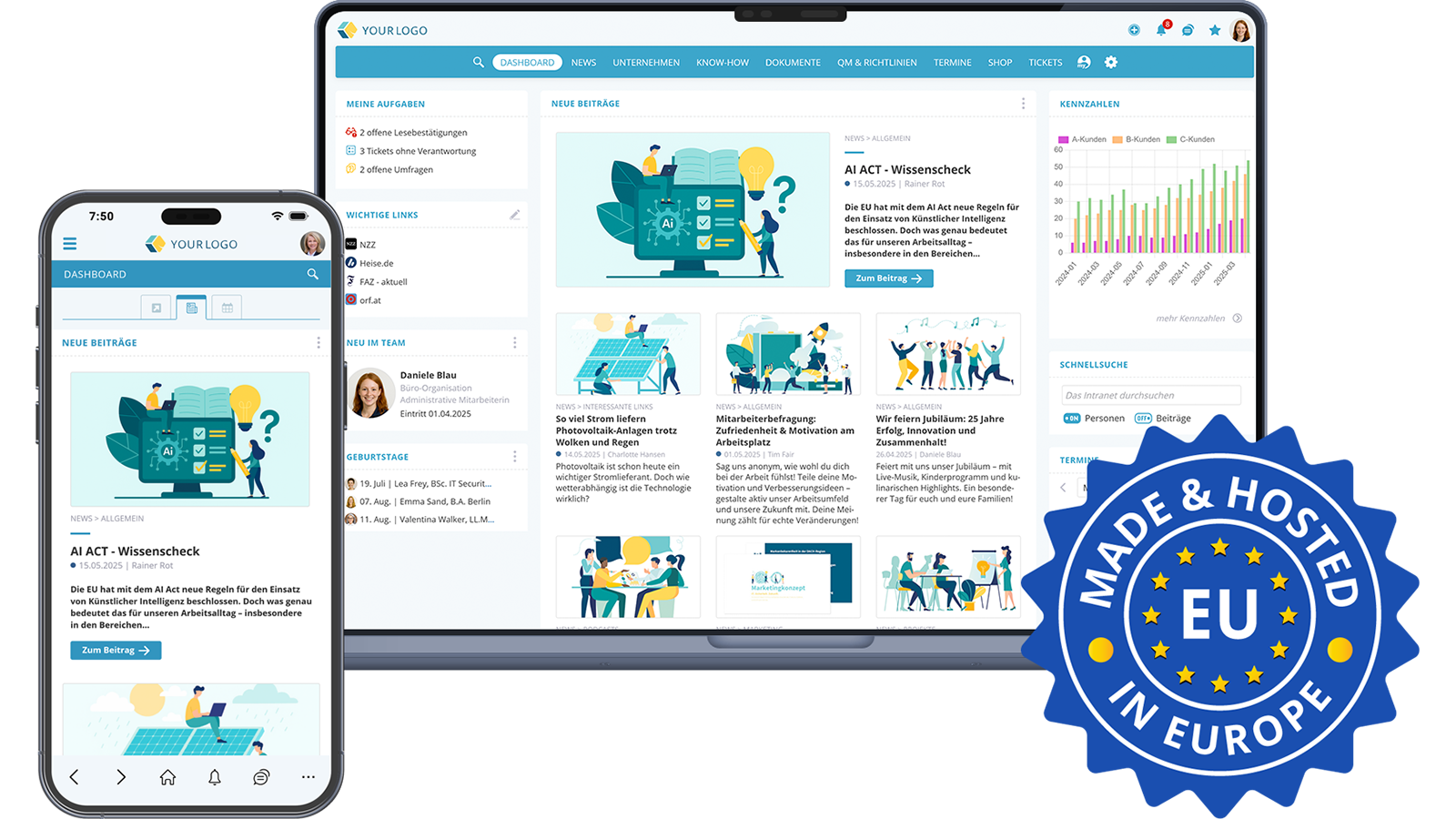
Team building and networking are an important part of corporate culture. They foster cohesion, improve communication, increase motivation and therefore also employee productivity. Collaboration software such as a social intranet or an employee app provides valuable support here. It creates a platform for sharing successes, feedback and recognition and strengthens the corporate culture.
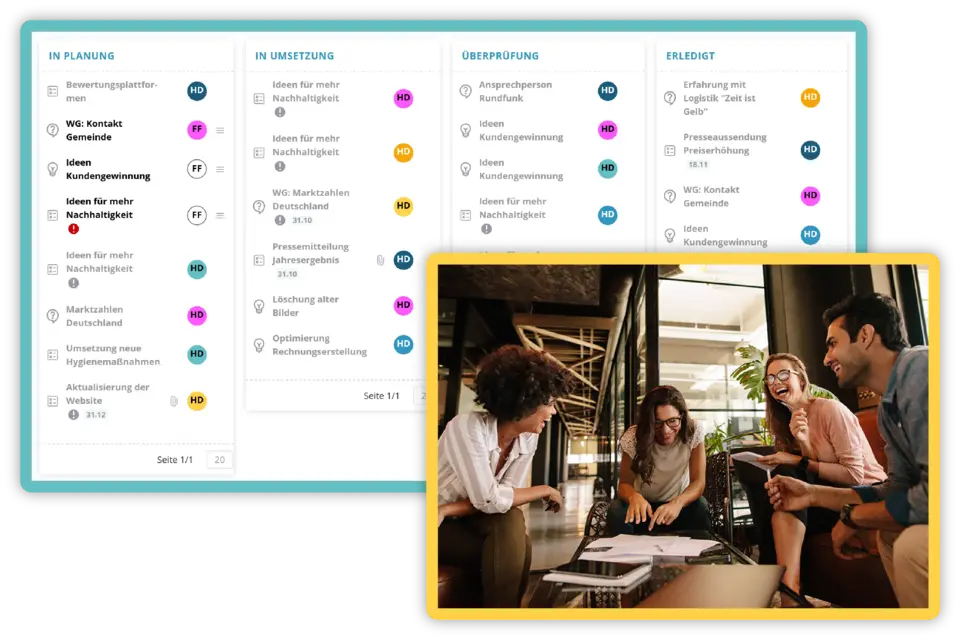 A social intranet fosters interactivity and collaboration
2. How the Intranet as Collaboration Software Enables Collaboration and Team Building
Intranet solutions and employee apps are collaboration software and offer a range of ways to foster team building and networking within the company. An employee app is simply an intranet for your pocket. It is a version of the intranet optimized for mobile use on smartphones and tablets, which mainly benefits users who do not sit at a desk. For mobile users and users without a work email address, it offers a number of advantages such as push notifications for particularly important news and safety alerts. Many of the functions and options that collaboration software provides enable better team building and networking within the company.
3. Intranet and Employee App Pave the Way for Reachability and Team Building
The most important and most fundamental benefit of an intranet and an employee app is that all of a company's employees appear together in one place in the first place and can be reached via their work contact details. This makes it possible to get in touch regardless of location, workplace, department or country. With an intranet and an employee app, employees are reachable not only for the company and their managers but also for their colleagues.
Networking Across Departments and Locations
An intranet or an employee app enables employees to connect across departments, locations and national borders. This promotes the exchange of knowledge and ideas and creates a sense of belonging. Being able to contact each other is the basic requirement for successful communication and collaboration, and therefore also for successful team building and networking within the organization.
Finding Competent Colleagues
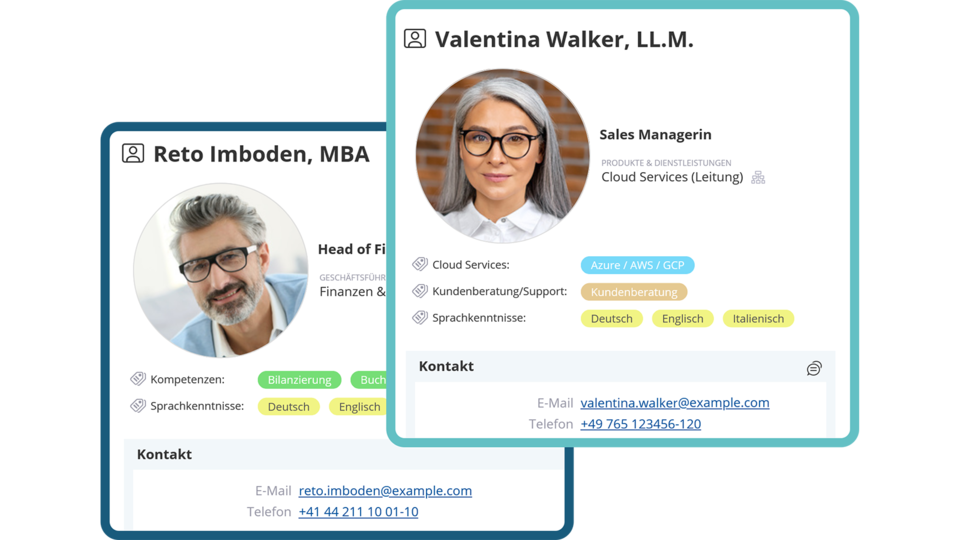
Good intranet solutions usually offer enough space to introduce employees with professionally relevant background information. Training, courses, additional qualifications or special work-related information can be entered in employee profiles. The HR department can enter this information, or employees can be given permission to maintain it themselves. This way, employees can find colleagues with special qualifications or experience with a single click.
Org Charts and Room Plans in the Intranet Support Networking
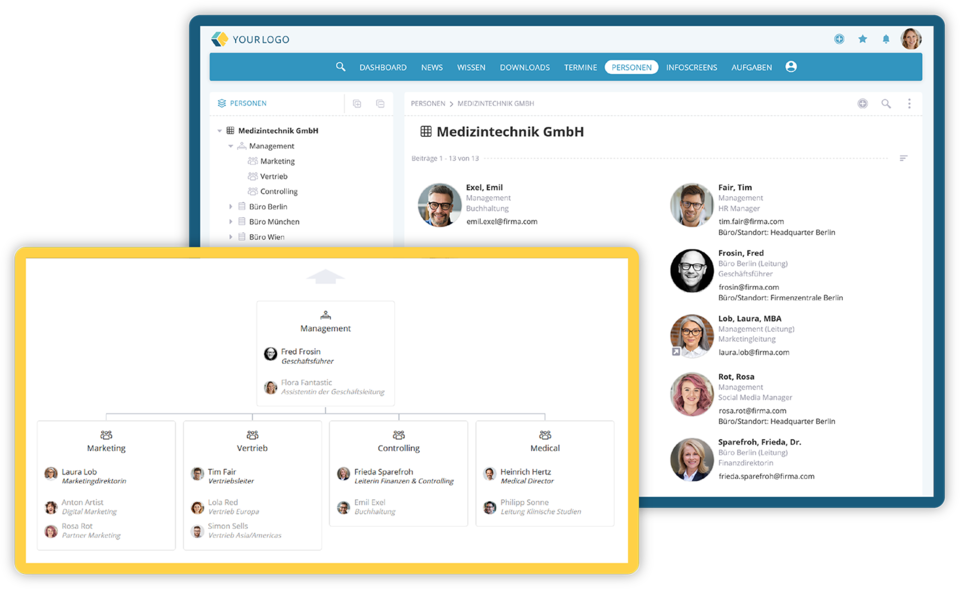
The functions of a good social intranet go even further. They show who is responsible for what and automatically build org charts of the organization. This gives a good overview of the organization, especially for new employees or for colleagues you do not know personally. Room plans can also be stored in the intranet, so that for meetings with colleagues at other locations you immediately know where to go.
4. Team Building and Networking Through Communication and Collaboration in the Intranet
An intranet provides a central platform on which employees can communicate and collaborate with each other. With features such as chats, comments and discussions in specific areas, employees can easily exchange ideas, discuss problems and work together on projects.
An intranet can have discussion groups for different departments, topics or projects. In these groups, employees can ask questions, give answers and share ideas. This fosters not only collaboration but also a sense of belonging and team spirit.
Teamwork Thanks to Collaboration Software
Collaboration software makes working together much easier. It enables collaboration across departments and locations. In good intranet solutions, project tasks can be jointly created, prioritized, assigned and efficiently processed in the ticket system. The ticket system can also be used to answer questions, share experiences and discuss possible solutions. Employees can also exchange ideas on specific topics or projects in their own chat groups or dedicated areas and make their experience available to others.
Centralizing Information Makes Teamwork Easier
Whether used via the browser or the app, the intranet serves as the central hub for all important information and resources. For example, a company can set up a knowledge base in the intranet where employees find frequently asked questions, guides and best practices. The content of an intranet can include company goals, policies, training materials, project plans and much more. Centralizing this information ensures that all employees have access to the same resources, which makes collaboration easier. On the one hand, this allows employees to support each other, for example by sharing know-how. On the other hand, it allows them to pull in the same direction and achieve goals together.
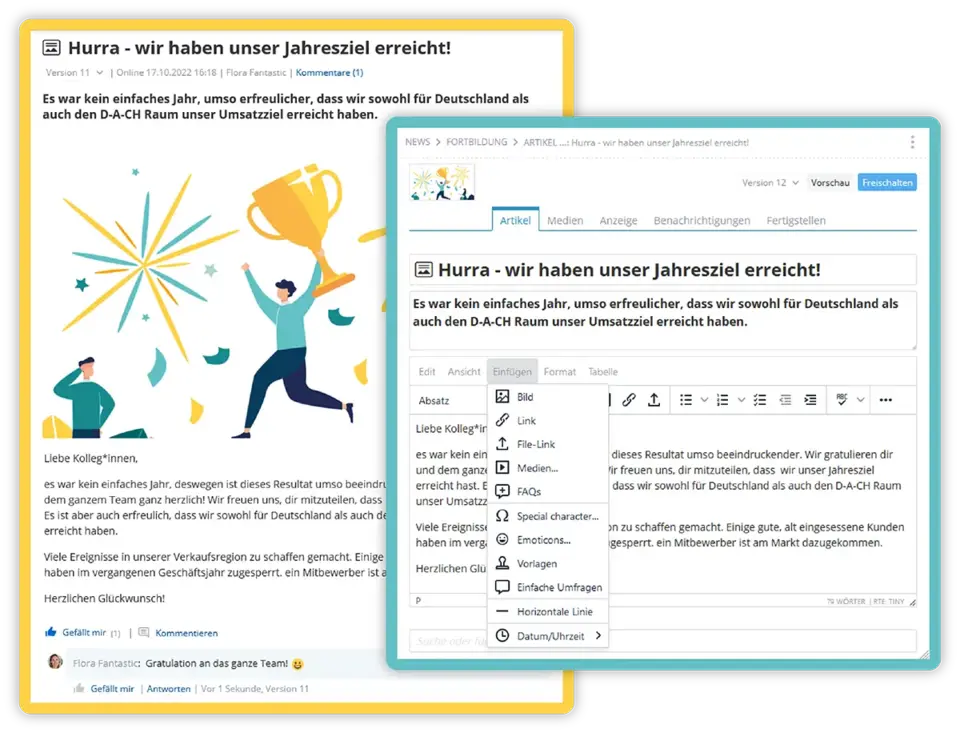 A social intranet motivates the workforce and helps achieve goals
5. Intranet and Employee App for Non-Desk Employees and Remote Teams
According to a study by Emergence, non-desk employees make up around 80% of the global workforce (“Deskless Workers Want to Enjoy Their Work, Too”, Boston Consulting Group). They work in essential industries such as healthcare, education, retail, logistics, construction and manufacturing. In addition, there are field staff and employees spread across several locations or countries. These employees are sometimes hard to reach and often receive little information. With the rise of remote work, the intranet and employee app are also becoming more and more important. They provide a platform that allows employees to stay connected and work together effectively even from a distance. Push notifications and chat functions ensure that important information is not lost. You can exchange ideas with colleagues you do not know personally or who are not nearby at the moment.
6. Promoting Transparency and Trust
The intranet is the ideal place to explain to employees where the company is heading, why certain decisions were made and which goals it is pursuing. This promotes transparency and strengthens employees' trust in the company and its management. When information about the company, financial reports and other important topics is shared, employees can develop a better understanding of business processes and gain trust in leadership and its decisions.
A company can also hold regular Q&A sessions with management in the intranet. Employees can ask questions and receive answers directly. This makes management approachable and strengthens transparency and the personal connection between management and employees.
7. Employee Retention Through Team Building and Networking in the Intranet
Team building and internal networking in the intranet can help strengthen employees' ties to the company. When information about company goals, visions and successes is shared, employees can develop a better understanding of the company's direction and identify with it more strongly.
For example, companies can regularly publish updates and success stories in the intranet. This can take the form of articles, blog posts, videos or podcasts. Employees can follow the company's progress and feel part of the bigger picture.
8. Supporting Team Building Activities and Mentoring Programs
An intranet can also provide a platform for mentoring programs. Employees can easily find mentors and get in touch with them. This fosters not only internal networking but also employees' professional development.
An intranet can also help organize team building activities. Employees can plan events, send invitations and collect feedback. This makes it easier to run team building activities and encourages participation.
9. Summary: Collaboration Software Boosts Collaboration, Team Building and Networking in the Company
Collaboration software offers many ways to foster collaboration and team building in a company. Teamwork and internal networking are the result and in turn contribute to a company's success. An intranet and employee app can also bring non-desk employees on board. They foster communication and collaboration. On top of that, they strengthen employees' trust, motivation and capacity for innovation. By providing and centralizing information and resources, promoting transparency and supporting remote teams, an intranet helps create a strong and well-functioning team.
Companies that invest in these areas create a positive working environment that leads to higher productivity and satisfaction and lower turnover rates in the long term. That is why companies benefit from actively fostering this exchange in collaboration software in the form of an intranet and integrating it into their corporate strategy.

Working as a consultant in the IT industry for over 30 years, specialist in software development, AI-supported data processing and neural networks, studied at WU Vienna
 Practical selection of features